
Managing foal weaning has been through a trial-and-error practical approach since breeding horses became domestic. Currently, more scientific research has been undertaken to look into alleviating 'weaning stress' by decreasing the potential psychological, physical and nutritional stressors associated with domestic weaning.
When is the preferable time to wean the foal? Which weaning technique is the best option to prevent stress? What are the impacts of weaning on the foal? What factors must be taken into account? What would be the best practice to improve the foal’s welfare during such a key moment in their life?
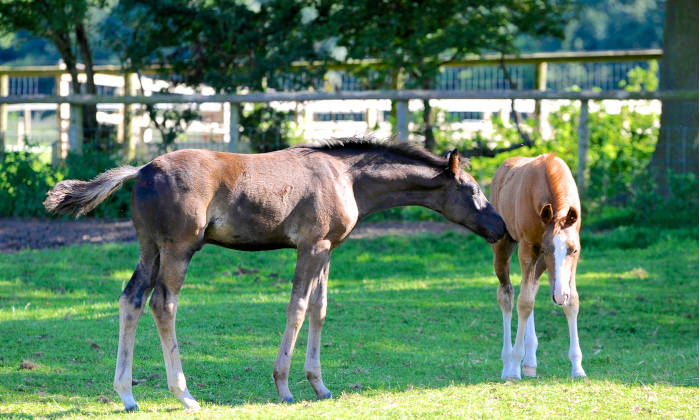
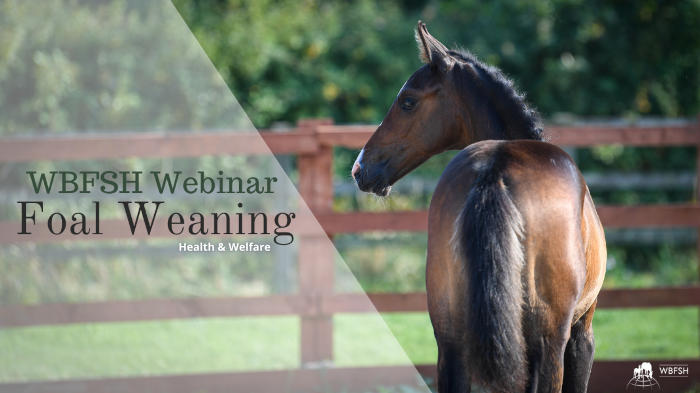
This foal weaning webinar will try to propose scientifically based answers to such questions. The focus will be on “A Good Life for Horses”, in line with the Vision proposed by the Equine Ethics and Wellbeing Commission to the FEI, for maintaining the Social Licence to Operate (SLO). The horse’s weaning experience will be discussed as a significant part of the process of ‘setting horses up for success’ using the latest research to consider the issues that might influence learning and development later in life.
About the speaker:
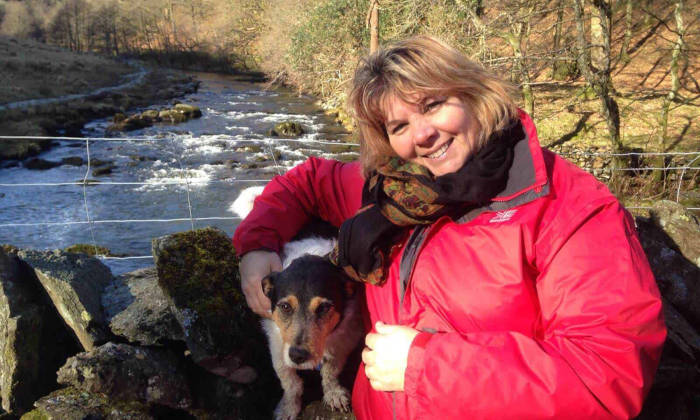
We have been fortunate to secure Prof Natalie Waran as speaker of this webinar. “An applied scientist by training and an educationalist at heart”, Professor Natalie (Nat) Waran is Executive Dean – Faculty of Education, Humanities and Health Science (Te Manga Kaupapa Mātauranga, Ahurea, Hauora).
Natalie led a number of strategic projects in her most recent role as a professor and inaugural director of the new International Centre for Animal Welfare Education at the University of Edinburgh, one of the UK’s leading universities. From 2006 to 2011, she was Associate Dean (Research) at Unitec’s Faculty of Social and Health Sciences in tandem with her role as Head of the School of Natural Sciences.
With a first class zoology degree from Glasgow University and a PhD from Cambridge University, she has worked in many different countries including China, India, Malaysia, Singapore and Hong Kong. She is also the chair of the FEI Equine Ethics and Well-Being Commission.
With changes in the breeding landscape over the past years, through new breeding technologies and changes in EU legislation, it has become necessary to review the definition of the rightful breeder of a horse. Breeders have the choice of which studbook they want to register their foals in, and trade of embryos across borders is increasing. The increased use of surrogates for flushed or ICSI embryos, as well as the fact that many studbooks no longer require covering certificates, means that the first concrete, verifiable contact by a studbook for a foal, is the entity that owns & registers that foal, applies for identification documents and provides material for DNA verification of the pedigree.
To be registered as the breeder of a foal in a studbook: If the breeder who made the choice of the genetic match still owns the foal at birth, they will be registered as the breeder. If they have sold the mare in foal, or the embryo before birth, and want to be registered as the breeder, they need to make an agreement with the new owner, who births the foal and notifies the studbook for its registration.
The studbook which is asked as first to register the foal should therefore obtain a clear confirmation by the person or entity which is asking for registration of the foal, which person or entity is legitimised to be registered as rightful breeder.
WBFSH Position Statement
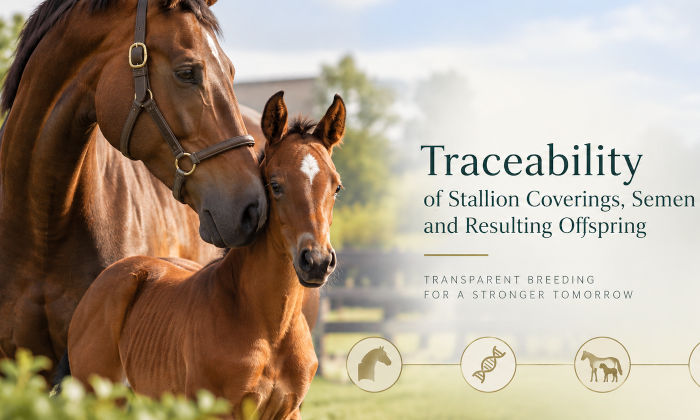
Good traceability is an important part of responsible sport horse breeding and helps support confidence in breeding, registration and parentage records. Traceability is generally most straightforward where the stallion, breeding records and resulting foal registration remain within the same national or studbook system.
The WBFSH recognises the important work already undertaken by studbooks, stallion owners, breeders, agents and breeding centres to maintain reliable records of stallion use and resulting offspring. Many countries and studbooks already have effective systems for recording coverings and linking these to resulting offspring. However, the increasingly international nature of sport horse breeding, and particularly the widespread cross-border distribution of semen, means that offspring may be registered with a studbook in another country which does not have direct access to the original breeding record. It is particularly in these situations that gaps in the traceability chain can arise.
The WBFSH also recognises and respects the diversity of legal frameworks, studbook systems and breeding practices across its membership. For this reason, it does not seek to prescribe one administrative system or protocol. Instead, the WBFSH supports the principle that sufficient information should be maintained, and where appropriate exchanged or verified, so that resulting registered offspring can be linked to the relevant authorised stallion use. This principle should also apply where semen, embryos or other genetic material are stored or transferred over time. Records should, where practicable, preserve sufficient continuity of identity and relevant authority to enable the material and any resulting registered offspring to be traced back to the authorised stallion use.
Stallion owners, holders of breeding rights, authorised agents and semen providers all have an important part to play in maintaining accurate breeding records. Equally, studbooks have an important role in maintaining reliable registration and parentage information and facilitating appropriate information exchange. Where breeding crosses studbook or national boundaries, cooperation between the relevant parties is particularly important to ensure that the traceability link between the authorised stallion use and resulting registered offspring is maintained.
The WBFSH considers that a stallion owner, holder of breeding rights or other appropriately authorised representative should, upon request and subject to reasonable verification of their current authority, be able to obtain from the registering studbook a list of offspring registered to the relevant stallion, including the registered name and life number of the genetic dam. This provides a practical way of reconciling breeding and registration records, particularly where semen has been distributed internationally and offspring may subsequently be registered in different countries or studbooks. The responsibility for requesting this information should rest with the appropriately authorised stallion owner, holder of breeding rights or representative; studbooks should facilitate such requests rather than be expected to provide information proactively to all stallion owners.
The purpose of this cooperation and information exchange is to support zootechnical traceability, parentage and transparency, not the enforcement of private commercial agreements. Studbooks should remain independent of contractual, ownership or payment disputes between breeders, stallion owners, breeding-rights holders, agents or other parties. Any information exchanged should be limited to what is necessary for the legitimate breeding, parentage and traceability purpose and handled in accordance with applicable legal and data-protection requirements.
Through this position, the WBFSH wishes to identify, share and promote good practice already present across its membership, encourage practical cooperation where breeding crosses studbook or national boundaries, and give appropriate recognition and visibility to effective approaches to traceability and transparency. By working together, studbooks and breeding stakeholders can strengthen traceability and transparency while maintaining a clear distinction between the studbook's role in ensuring reliable breeding records and the responsibility of individual parties for their private commercial arrangements.
(Ermelo, 8th September 2026)

To filter, search or view more rankings you need to login or create a FREE account with the WBFSH
Create FREE AccountAlready have an account?
Sign In