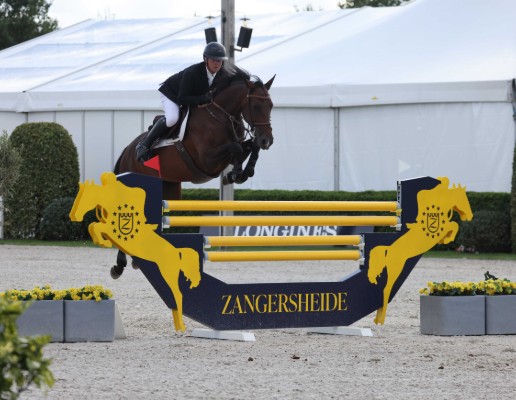
In 2022, the World Breeding Federation of Sports Horses (WBFSH), estimated that 1.52 million sports horses were involved in the breeding industry across the breeding life cycle (Holder-Vale and Hart, 2023). The WBFSH unanimously agreed at their 2023 General Assembly that the Federation would take the lead to generate evidence that could help determine how sport horse breeding influences the quality of life of horses (WBFSH, 2023). The WBFSH commissioned an initial project in 2024, working with Hartpury University to produce a contemporary evidence-informed welfare policy document that the organisation could develop to support WBFSH activities and inform SLO in the breeding sector in consultation with industry stakeholders.
Initial interviews with WBFSH members identified three themes: selection of breeding stock, breeding stock management, and foal and youngstock management that informed a subsequent systematic review of published peer-reviewed literature and relevant equestrian grey literature. Across all three management areas reviewed, consideration of horse welfare needs was limited within research study designs. with published papers tending to focus on the execution or efficacy of specific techniques and practices, or on health and disease outcomes rather than applying a more holistic evaluation of how the welfare of horses was impacted. In general, current welfare guidelines recommended best practice within a broader welfare context but lacked specific detail or described options to implement these measures. The results identified that increased evidence to understand current practices combined with a greater connection between the breeding and competitive stages of a sport horse’s life alongside educational support were required to inform practice that generated a sustainable approach to sport horse management that prioritises providing horses with a good life across the different stages of their careers.
As part of their ongoing commitment to supporting evidence-informed approaches in sport horse breeding that prioritise a good life for the horses involved, the WBFSH are funding a PhD with Hartpury University. This PhD focuses on a key aspect of sport horse breeding: Assisted reproductive techniques (ARTs). Approaches to ART application, management and regulation vary across breeds, different countries and WBFSH members. ARTs were identified through the systematic review and in consultation with industry stakeholders as an area where existing traceability, transparency and welfare implications could be improved. This programme of study will apply a holistic approach working with WBFSH and industry stakeholders to focus on understanding existing practice across the equine breeding sector to generate a profile of current practice, to understand cultural differences and influences underpinning ART use globally and to evaluate their implications to horse welfare. The results will inform good practice guidance and support future WBFSH education initiatives in this area.
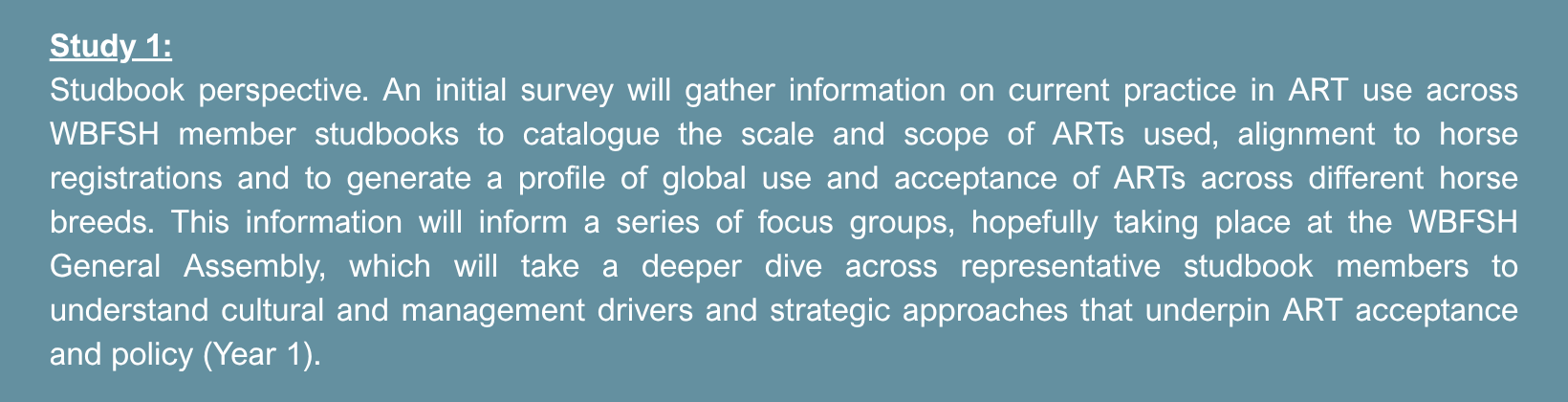
Programme of Study:
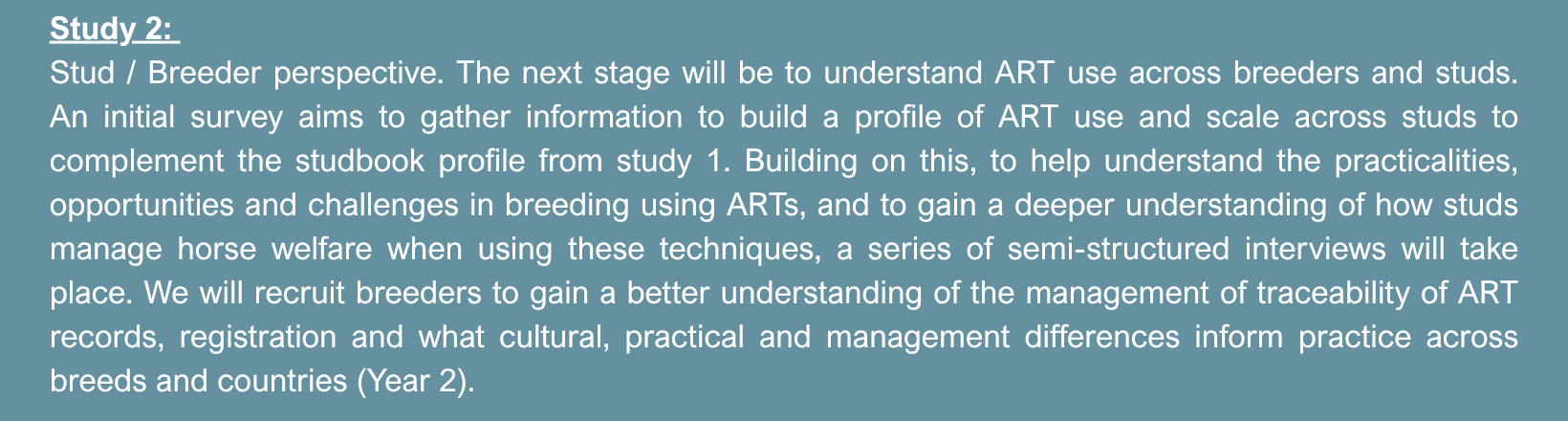

The final outcome of the project will bring together the work undertaken to date to generate a system which can provide a holistic measure of horse welfare, that will be made available to WBFSH members to support their practice and which will inform WBFSH education and evaluation of stud / studbook practice relating to ARTs (Years 3 and 4).
Across the project, the aim is to provide regular updates and presentations to WBFSH members.
We are pleased to announce the recruitment of Molly MacBeth, an Hartpury Equestrian Sport Science Graduate, to undertake the PhD supported by Prof Jane Williams, Dr Emma Davies and Lorna Cameron. The team bring together a wealth of experience working with the equestrian sector and undertaking research evaluation of equestrian management, performance, and training, and how these link to equine wellbeing expertise in horse welfare and performance, breeding, qualitative research and science communication.
The aim is to work with the industry to undertake real-world applied projects that can make a difference to equestrian industry and help provide evidence informed approaches to enhancing horse welfare and demonstrate a sustainable industry with strong SLO.